The Lease That Outlives the Logic: A Premises Review for Owner-Managers
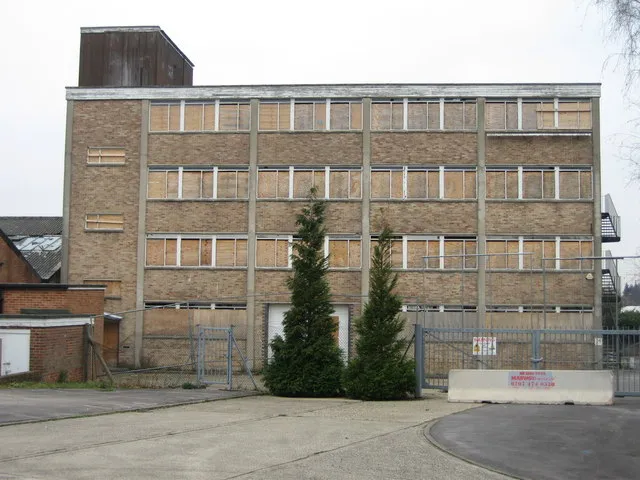
Photo: Sebastian Ballard, CC BY-SA 2.0, via Wikimedia Commons
Premises decisions are rarely made coldly. A building can signal credibility, house a team, or simply feel like the right move after years of working from a spare room. None of that is irrational, but it can obscure a simple fact: a lease is a financial commitment that runs on a different clock from the business case that justified it. The plan that made sense at signing may look very different two years later, and the landlord is not obliged to notice.
For owner-managers, the question is not whether to take premises. It is whether the commitment can still be justified, and whether the exit is real.
The business case has a shelf life. The lease does not.
Most premises decisions are modelled on a set of assumptions: headcount, revenue, client mix, working patterns, the need for a physical presence. Those assumptions change. A lease does not. The gap between the two is where the trouble sits.
This is not an argument against commitment. A well-chosen building can support growth and anchor a team. It is an argument for treating the lease as a living financial instrument rather than a one-off transaction. The owner who understands the break dates, the reinstatement obligations and the service charge exposure is in a stronger position than the one who remembers only the rent.
Break clauses are not a get-out. They are a deadline.
A break clause looks like flexibility on the agent's particulars. In practice it is a set of conditions with a date attached. The conditions matter as much as the date. Common requirements include giving notice within a narrow window, being up to date with rent, leaving the property in a specified condition, and paying a penalty or the landlord's costs. Miss the window or fail a condition and the break disappears.
The practical discipline is to diarise the break date at least twelve months ahead, then six months, then three. Read the clause again each time. Confirm in writing what the landlord expects. Do not assume that a break clause means the lease is effectively short; it means the lease is short only if you perform.
Reinstatement is a liability you inherit at signing.
Reinstatement obligations are often buried in the schedule and rarely priced at the start. They can require the removal of alterations, the reinstatement of partitions, the making good of wear and the return of the property in a specified state. For a business that has fitted out a space to its own needs, the cost can be material.
The defence is evidence. A detailed schedule of condition at the start of the lease, with photographs, is not bureaucracy; it is the record that limits what you can be asked to put right at the end. If the lease is already running, commission a condition survey now. It is cheaper than discovering the gap during dilapidations negotiations.
Service charges reward attention.
Service charge exposure is variable, often opaque and frequently underestimated. The charge covers the landlord's costs of maintaining common areas and can rise without the rent changing. Caps and exclusions are negotiable, particularly in smaller buildings or with less experienced landlords. If the lease allows the landlord to recover costs without a cap, the business is carrying an open-ended liability.
Ask for the last three years of service charge accounts before signing. Look at the trend, not just the current figure. Check what is included, what is excluded and how the landlord reconciles the budget at year end. A service charge that is merely disclosed is not the same as one that is controlled.
Flexible is not the same as flattering.
A building can flatter a business. It can impress clients, support recruitment and provide a credible address. Those are legitimate benefits. But flattering terms are not the same as flexible terms. A long lease with a distant break, uncapped service charge and heavy reinstatement is not flexible, however good the address.
The test is simple: if the business needed to leave in twelve months, what would it cost and how long would it take? If the answer is uncomfortable, the commitment is not flexible. That does not make it wrong, but it should be a conscious choice rather than an unexamined assumption.
A one-page test for the premises commitment
A short annual review, recorded on one page, is enough to keep the commitment honest. The questions are:
- What is the current cost per occupied desk or per square foot, including rent, service charge, rates and utilities?
- What was the headcount and revenue assumption at signing, and what are they now?
- When is the next break date, and what must be done to exercise it?
- What is the estimated reinstatement liability, and is it provided for?
- Is the service charge capped, and what has it done over the last three years?
- If the business needed to leave, what is the realistic exit cost and timeline?
- Does the space still support the work, or is it supporting a version of the business that no longer exists?
None of these questions requires a consultant. They require an hour, the lease and a willingness to write down the answers.
Before the next signature
For businesses approaching a renewal or a new lease, the discipline is to negotiate the exit before the entry. Break clauses, caps on service charge, schedules of condition and reinstatement limits are all easier to secure before signature than after. Legal review is not a luxury; it is the mechanism by which the financial commitment is understood.
The premises should serve the plan. When the lease outlives the logic, the business carries a cost it no longer needs. The remedy is not necessarily to leave. It is to know, with precision, what the commitment is and what leaving would take.